


BMI Poster - BMI Chart Poster - Body Mass Index Poster - 18" x 24" Poster - Laminated
SKU: BMINP1824




FREE SHIPPING on orders over $29 - 15% off, use the code LEARN15 - Purchase Orders Welcome - Get A Quote
FREE SHIPPING on orders over $29 - 15% off, use the code LEARN15 - Purchase Orders Welcome - Get A Quote


Sign up today and we'll send you a 10% discount code towards your first purchase. Some restrictions apply.
Are you 18 years old or older?
Sorry, the content of this store can't be seen by a younger audience. Come back when you're older.
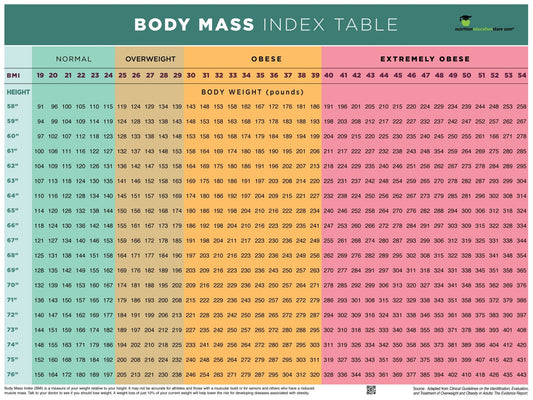
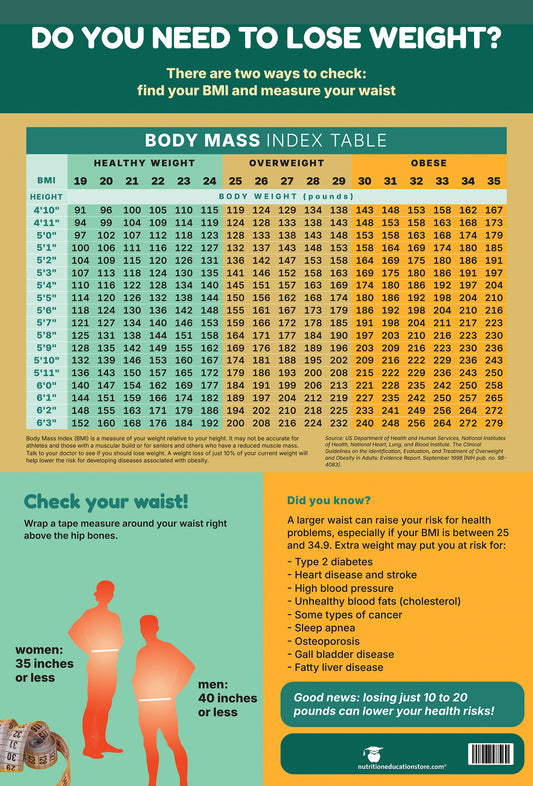
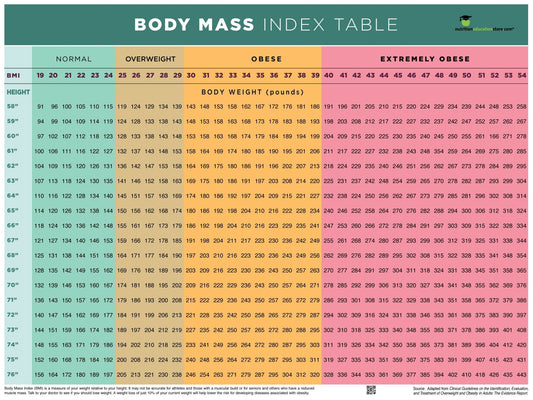
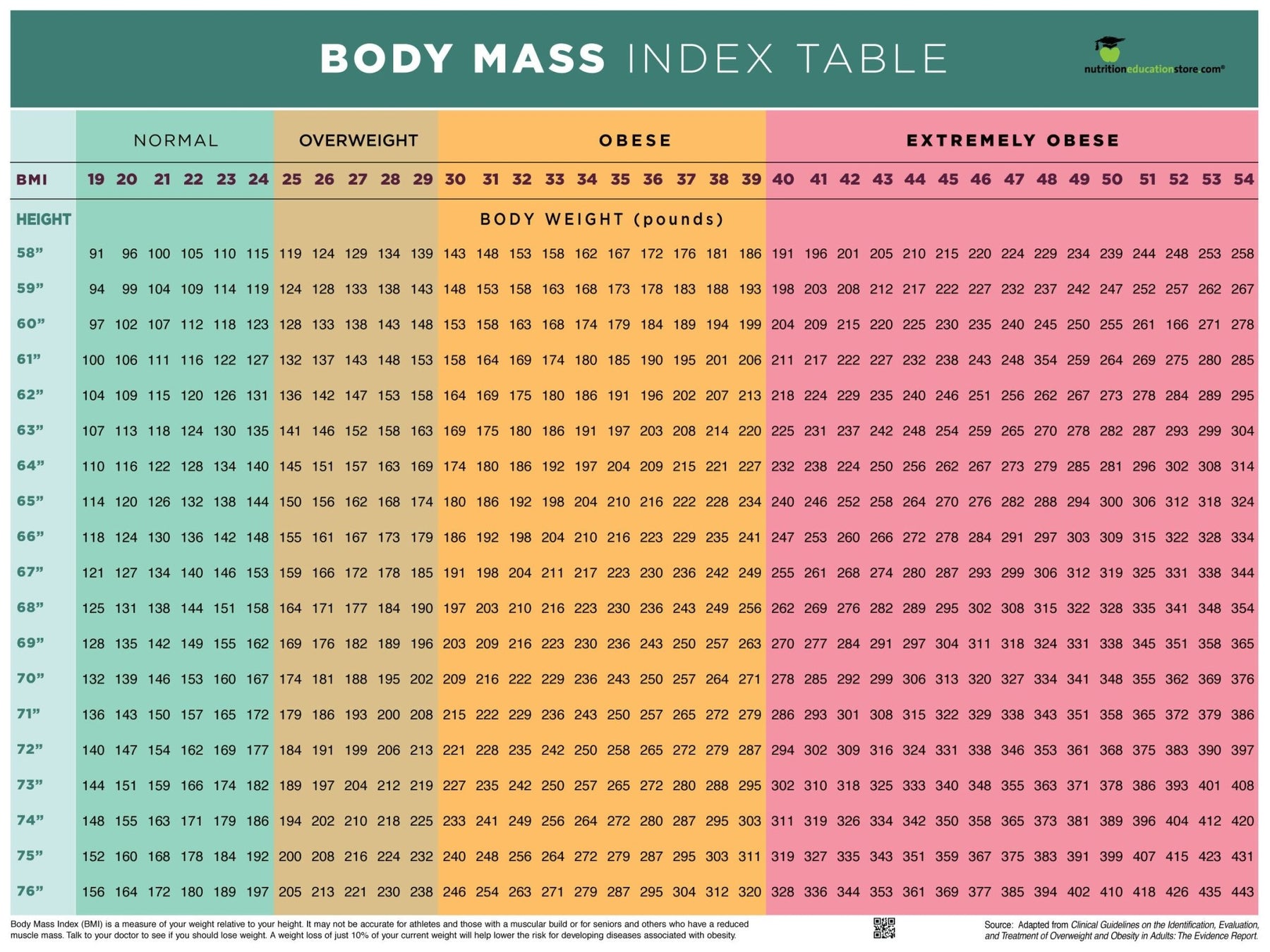
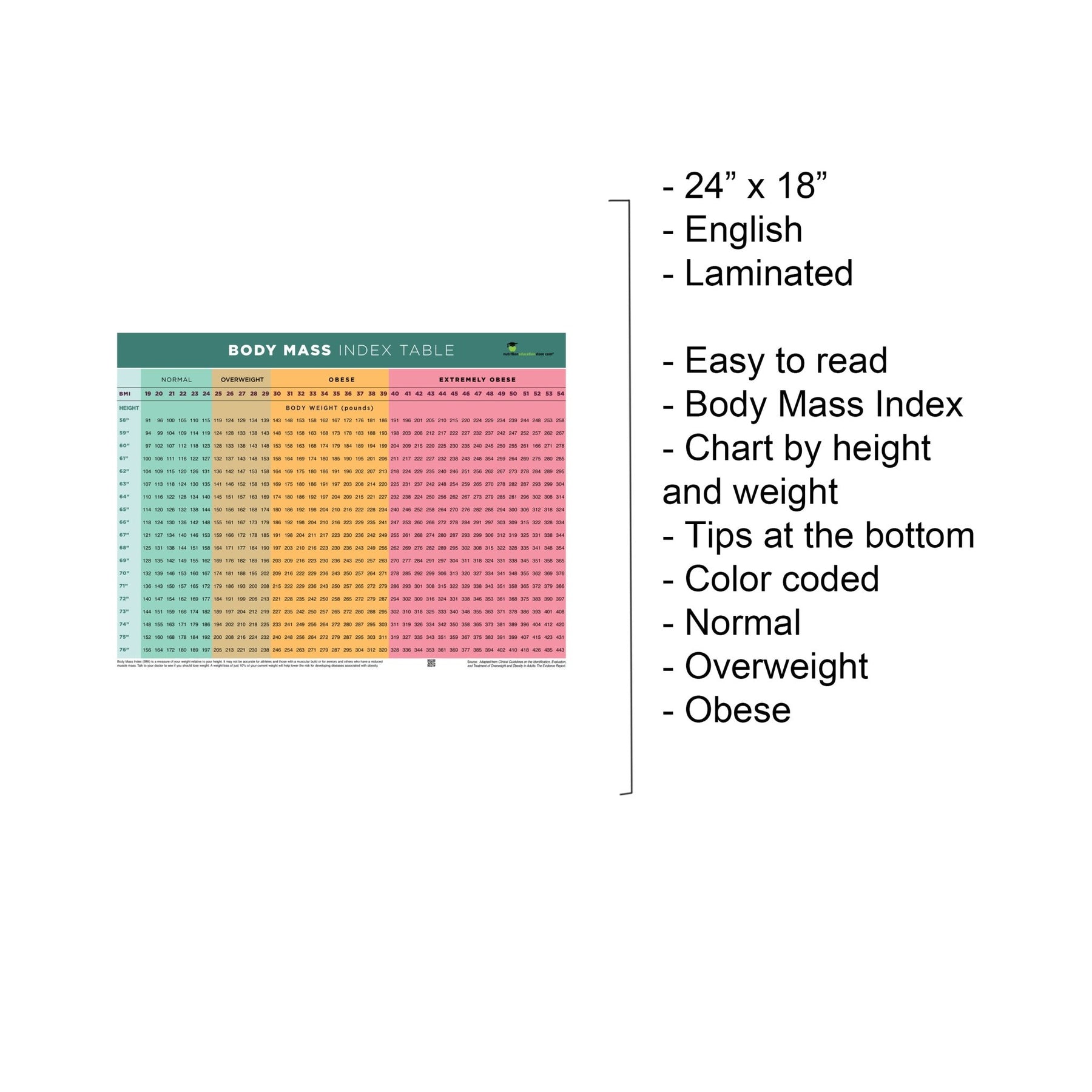
Over two-thirds of the people in the United States are overweight or obese. This BMI poster uses the established body mass index or BMI chart to help individuals see where their weight falls in proportion to their height. Show them where they are on the scale and guide them to use effective diet and lifestyle means to lose weight. Plus it is fun to see progress!
Use the BMI index on this wellness poster to assess weight and health risks.
Learning objectives & benefits:
✨ FREE 2026 Handout Pack included — and save even more with our new bulk discounts!
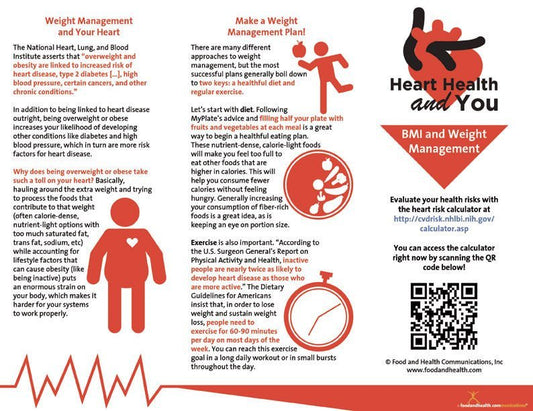
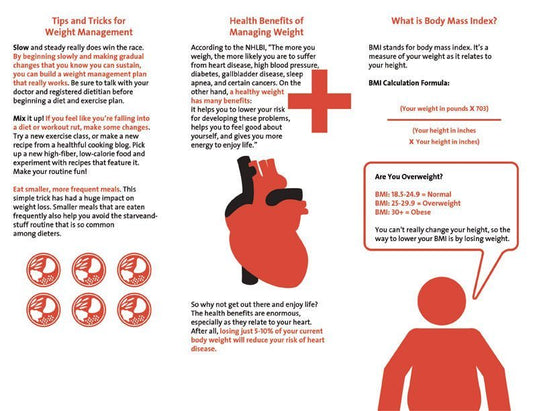
Body Mass Index (BMI) is a simple screening number that estimates body fatness from a person's height and weight. It is calculated as weight in kilograms divided by height in meters squared, or in US units as BMI = 703 × weight (lb) ÷ height (in)². Because it is quick, low-cost, and easy to explain, BMI is widely used in clinics, exam rooms, schools, and worksite wellness programs as a first step to flag when someone may benefit from a closer look at their health.
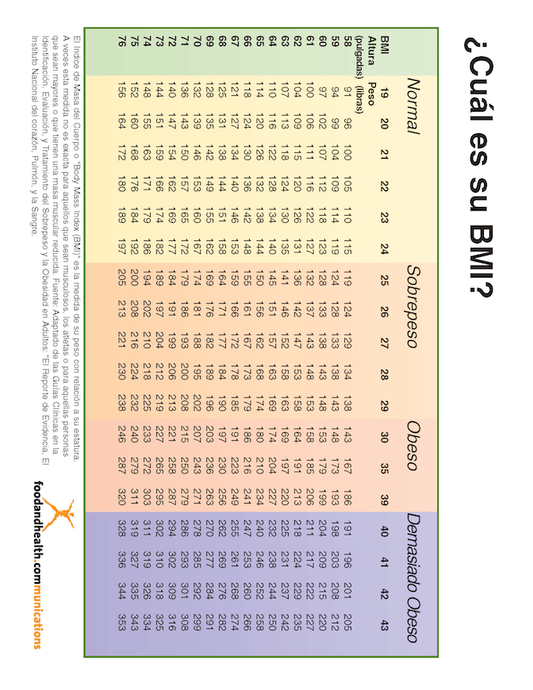
Find the person's height along one side of the chart and their weight along the other. The number where the two meet is the BMI. Compare that number to the standard adult categories:
The color bands on this poster make each category easy to see at a glance, so clients can find where they fall without doing any math.
In US units, multiply weight in pounds by 703, then divide by height in inches squared. For example, a person who is 5'6" (66 inches) and weighs 160 pounds has a BMI of 703 × 160 ÷ (66 × 66) = about 25.8. In metric units, divide weight in kilograms by height in meters squared.
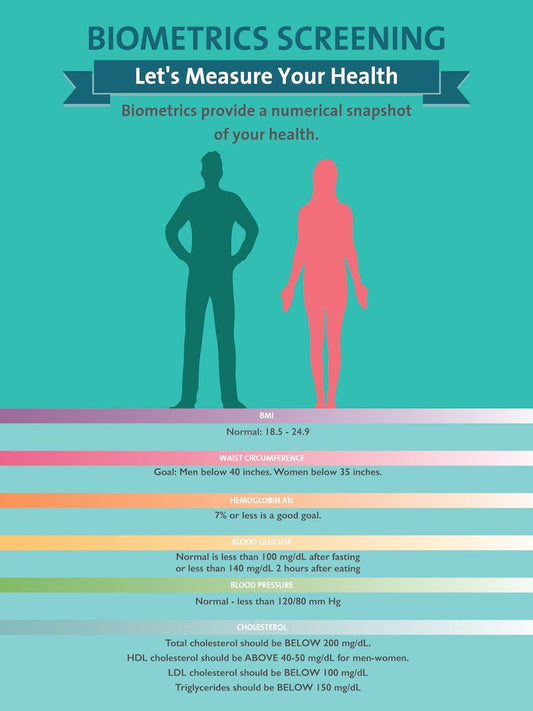
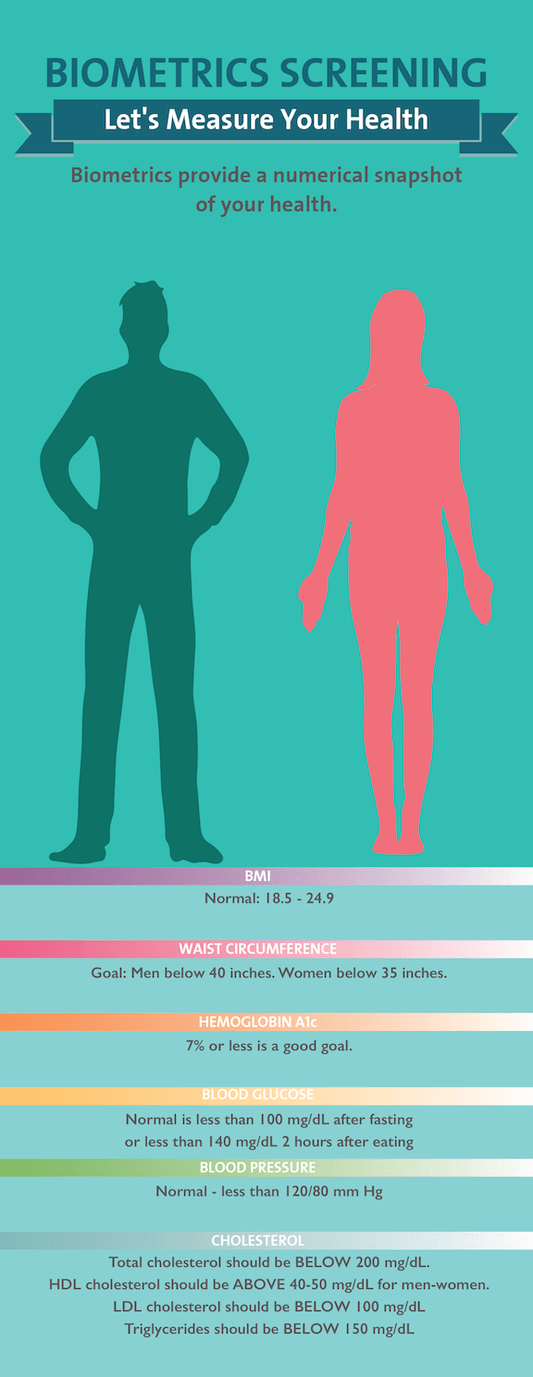
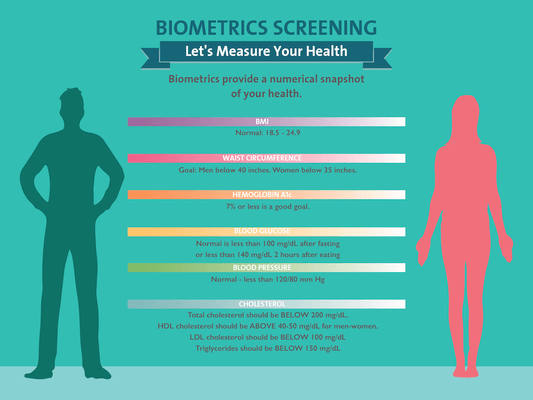
For most adults, a BMI between 18.5 and 24.9 is considered a healthy weight. Below 18.5 is underweight, 25.0 to 29.9 is overweight, and 30.0 or higher falls in the obesity range.
BMI is a screening tool, not a diagnosis. It does not distinguish muscle from fat, so it can misclassify athletes and very muscular people as overweight, and it can miss low muscle mass in older adults. It is most useful when read alongside other measures such as waist circumference, activity level, diet quality, and lab work — especially now, as weight and health care place more emphasis on body composition and muscle health. Use BMI to start a conversation, not to label a person.
Not in the same way. Children and teens are assessed with age- and sex-specific BMI-for-age percentiles rather than the fixed adult categories above. This poster uses the adult BMI ranges.
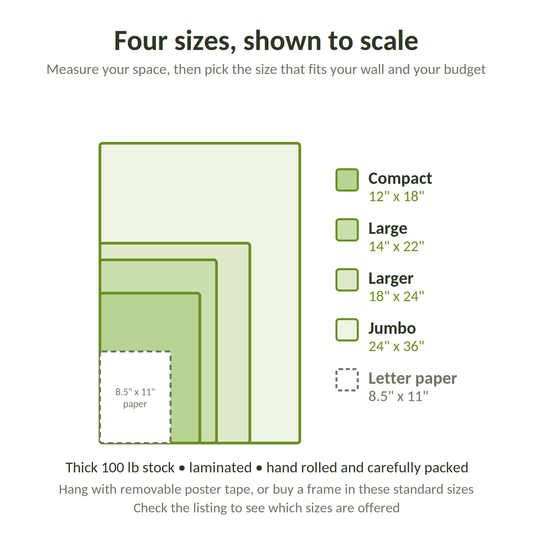
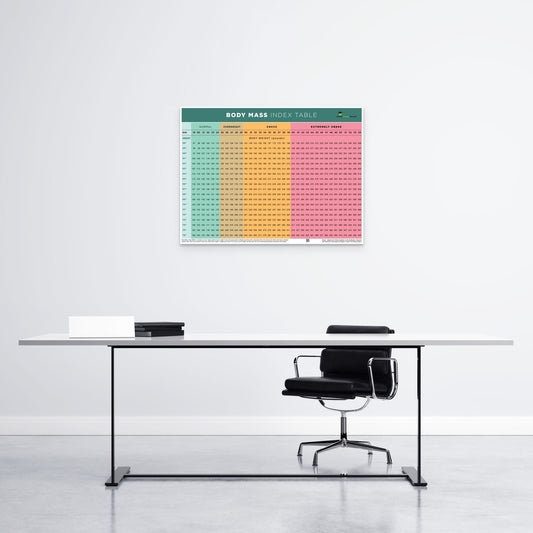
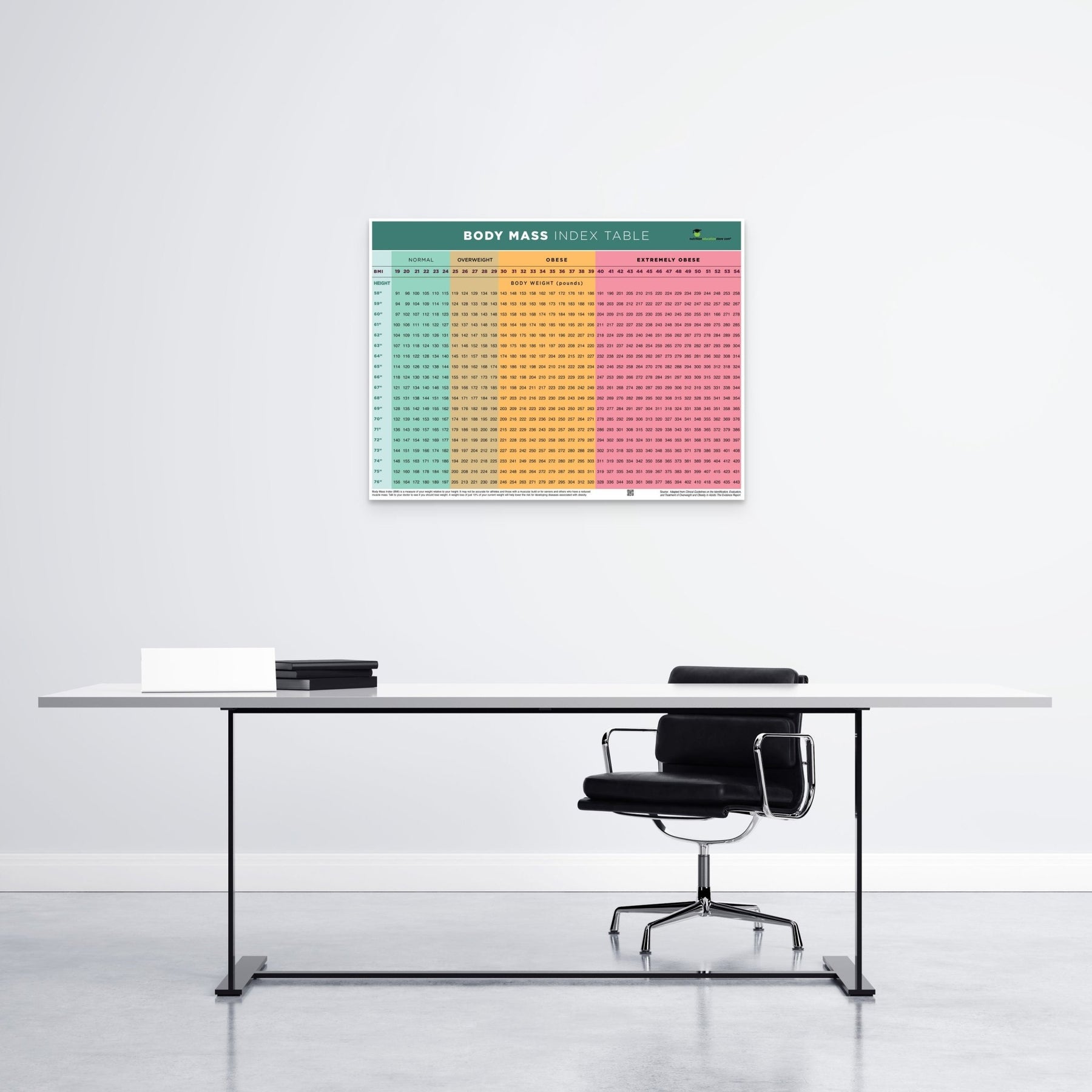
It is a laminated 18" x 24" poster in English for general adult audiences. The wipe-clean lamination makes it ideal for clinics and exam rooms, classrooms and cafeterias, gyms, and employee wellness programs and health fairs.
Subscribe today and get 10% off your first purchase