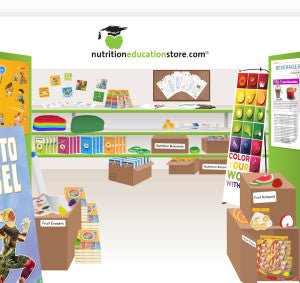



A Sodium Awareness Display: Guess the Salt in a Frozen Dinner
The activity that makes this display work: bring in two or three real packaged meals from a supermarket, have people guess the sodium in each, then show them where that number is on the label. Frozen dinners and canned soups are reliably shocking.
Here is the whole display, with the materials and two activities.
The materials
- The anchor: Salt Test Tube Display Kit. Being able to pick up a sealed tube holding a day's sodium is what people remember; the tube does the work a chart cannot.
- Posters: How Much Salt Is In That? — sodium in frozen and restaurant foods, 12 x 18 — and Low Sodium Choices, which gives people somewhere to go once they are alarmed. Pair them: the first creates the problem, the second solves it.
- Or the full-size version: Sodium Math Poster, 18 x 24, on a tabletop easel.
- Banner: Change It Up Banner, 48 x 36.
- On the floor: Nutrition Facts Label Floor Decal — a giant label is the easiest way to point at the sodium line in front of a group.
- Handouts: Sodium Math Handout Tearpad, 50 pages.
- Prizes: Change It Up Stickers and Change It Up Bookmarks.
- For a class rather than a booth: Sodium Education PowerPoint and Handouts, or Salt Math PowerPoint.
- From the supermarket: two or three packaged meals. A frozen dinner, a canned soup, a jar of pasta sauce. Keep the packages.
Activity 1: Guess the salt content
A little preparation pays off here. Buy the items, write down the sodium per serving and per container, and bring the packages with you.
Hold up the first item and ask people to guess how much sodium is in a serving. Take guesses, then reveal it. Then ask the second question, which is the one that lands: how many servings are in the container? A frozen lasagne at 700 mg a serving and two servings a tray is 1,400 mg — most of a day in one dinner.
Use the salt test tubes alongside, so people can see the quantity rather than hear a number. Give stickers and bookmarks for taking part, not only for being right.
After two or three items, ask how they feel about it. Roughly what they expected, or higher? Then use the floor decal to show exactly where on the Nutrition Facts panel that number lives, and the %DV column next to it — which is the shortcut most people have never had explained.
Activity 2: Make a low-sodium shopping list
Brainstorm what is typically on a shopping list, then work out together which of those items are the sodium-heavy ones. The answer surprises people, because it is rarely the salt shaker: it is bread, deli meat, sauces, soups and anything from a restaurant.
Then the practical bit: how do you remember to check? Compare two versions of the same product on the shelf, pick the lower one, and buy that from then on — it is a one-time decision per product rather than a daily act of willpower. That framing is why this activity works better than a list of foods to avoid.
The numbers to have ready
Most people aged 14 and over should aim for less than 2,300 mg of sodium a day, and lower if a clinician has advised it. And the point that reframes the whole topic: the large majority of sodium in the American diet is already in packaged and restaurant food before anyone picks up a salt shaker. That is why the display is built around supermarket packages.
Free printable handout
A reduction handout (PDF) for the table.
More display plans
- Sugar awareness — the same display built around sugar, and the closest sibling to this one
- MyPlate
- 10,000 steps
- Portion control
- Beverage better
- Nutrition month
- Fresh fruit and vegetable month
- And how to do any of it on a small budget