





Do I Have to Throw Out My MyPlate Materials?
Since the USDA replaced MyPlate with the new food pyramid in early 2026, the question I hear most from educators isn't about protein targets or full-fat dairy. It's simpler and more anxious than that: are the MyPlate posters on my classroom wall now wrong?
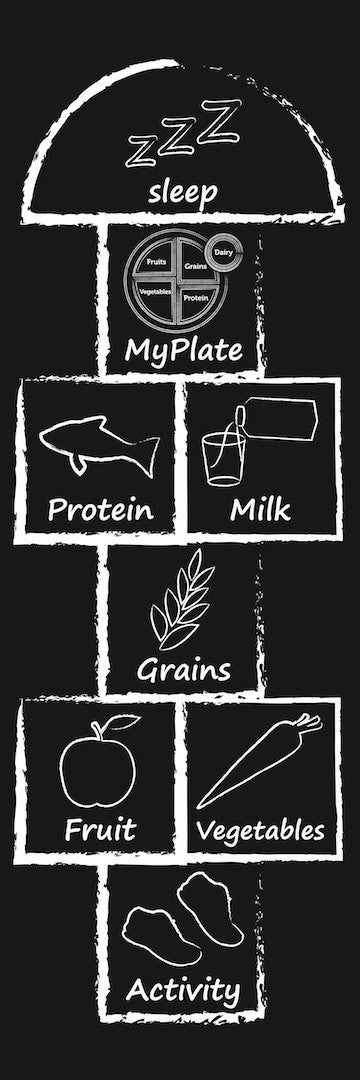
Short answer, no. And I can tell you that with more than an opinion behind it. We sell both lines here, and both keep moving, steadily, side by side. Orders for MyPlate posters, tearpads and handouts have held right alongside the new pyramid materials. Educators aren't replacing. They're adding. That tracks with how the two actually work in a room: a plate shows a learner how much of a meal each food group should take up, and a pyramid shows which groups to emphasize. Those are two different lessons. Most people teaching real audiences need both answers, and the diabetes plate method in particular is standard clinical practice that the icon change doesn't touch at all.
So here's the practical guidance. If you're building a new program this year that's tied to federal guidance, whether that's for grant reporting, curriculum alignment or anything that gets audited, anchor it to the pyramid. That's the current USDA icon and it's what reviewers will expect to see. If you already have MyPlate materials that work, keep using them. They teach portioning as well as they ever did, and there's no reason to throw out something your learners respond to.
If you want the full breakdown of what actually changed, the protein target going from 0.8 to 1.2 grams per kilogram, full-fat dairy coming back, why the whole pyramid is upside down this time, we put it all in one place along with a free printable handout you can take straight into a classroom or health fair: The New Food Pyramid (2026): What Changed and Should You Still Teach MyPlate?